
I have fallen in love with it again, but for a long time, I dreaded running. For all of high school I ran cross country and track and field for my school. It was a great way to start running more intentionally. However, when I was training, I often forgot to have fun with the sport. I was so focused on getting better and so anxious about performing well for myself and for my team that I began to dread practices and races. If I felt I did not run well, I would feel disappointed with myself for days. I refused to listen to my body. I under-fueled in hopes of getting faster and ran through injuries in fear of missing practice.
When I started university, I still ran sometimes to stay active, but had completely lost my love for running. It was not until the pandemic that I started running regularly again. Gyms were closed so it was the easiest way to get moving every day. I tried to make it as enjoyable as possible, using running to explore dfferent neighborhoods and parks or even catch up with a friend. With this new mentality, I started looking forward to my runs.
I tried not to track my runs, just running intuitively, and swore off any races. After a few years though, that changed. I signed up for my first half marathon in 2024 and had so much fun challenging myself and training with a goal again. I continued training and signing up for a half-marathon a year. This year, almost 10 years since I stopped running competitively, I have started tracking my runs on Strava and paying more attention to my progress. I had never used a run tracking app and was afraid I would obsess over my split times the way I did when I was running competitively. I felt ready to be more intentional about my running without being self critical. It was helpful to have my stats as I slowly increased my distance and tempo in training for my half marathon this spring.
I still slip into a harsh internal dialogue from time to time. It’s a process! I work every week to have fun and just enjoy what my body is capable of and where my legs can take me. I use my time running to be outside, explore different trails and parks, catch up with friends, and have time to think.
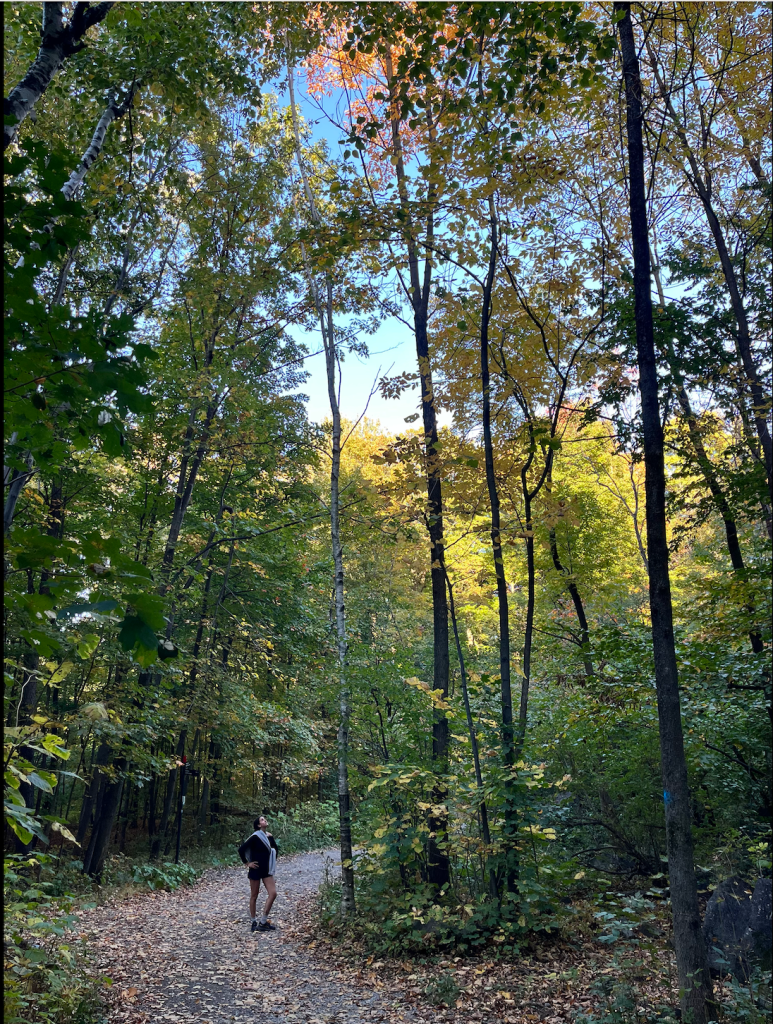
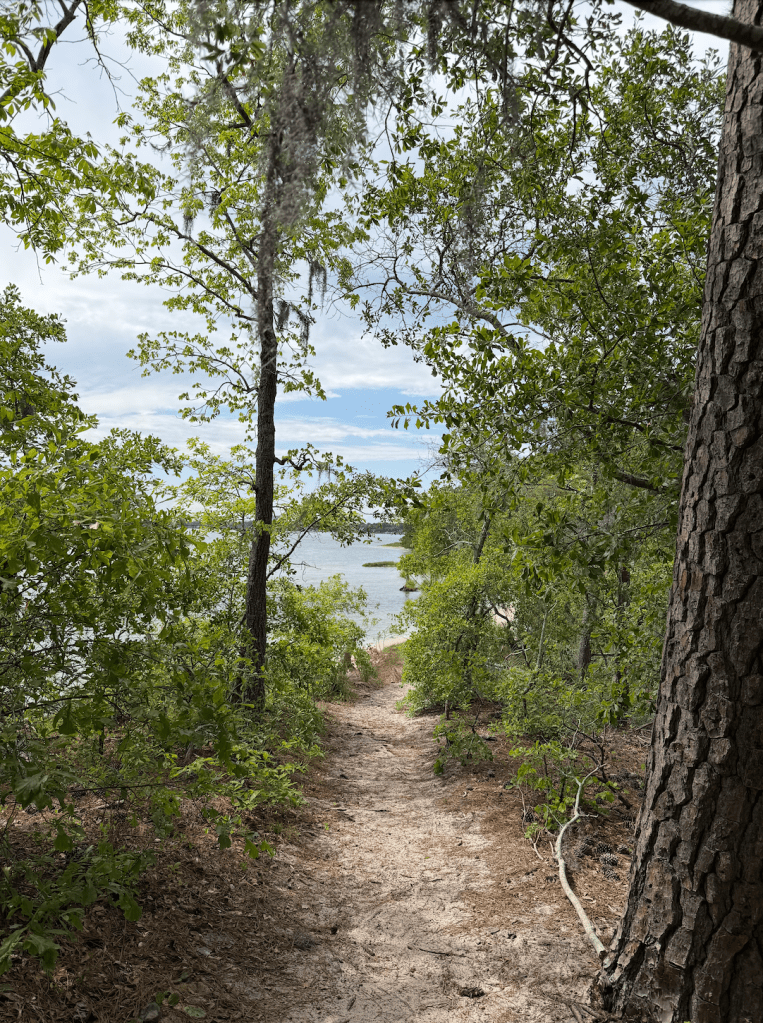
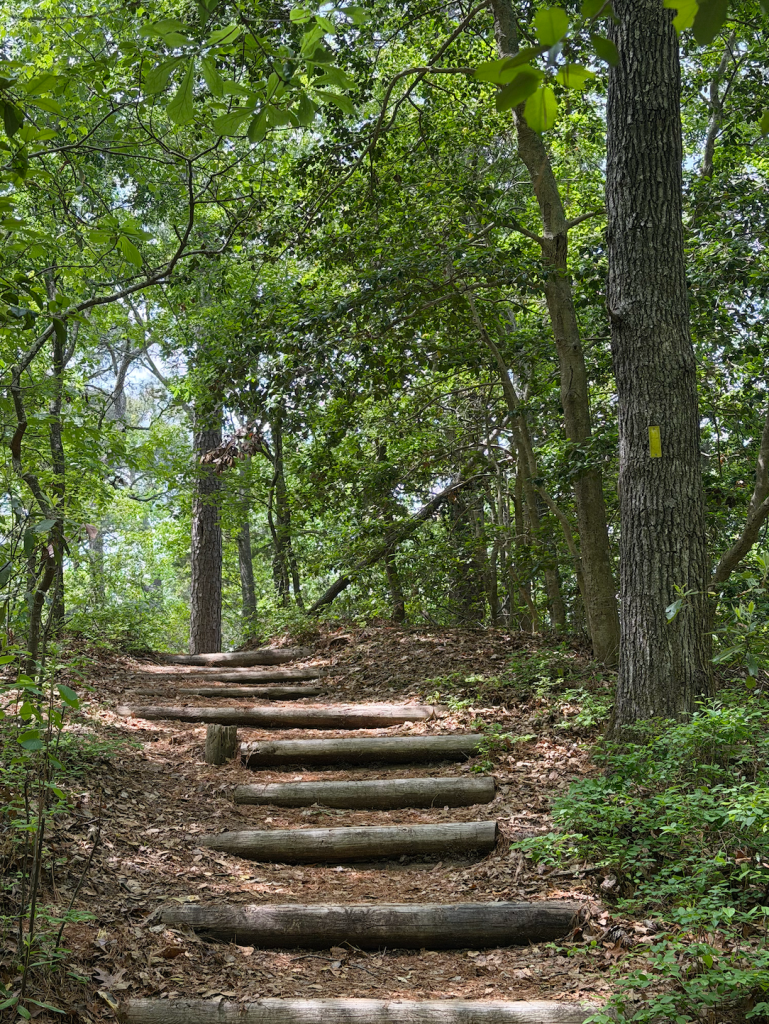
These are a few things I have learned and unlearned along my running journey:
Everyone trains differently.
When I was running cross country, I was running 6 days a week. As an adult, it’s not sustainable and realistic for me to run so often. I found it hard to know how often I should run a week, or even wanted to. For some people, a training schedule is helpful for their consistency and structure. However, this is not the case for me. I enjoy my runs so much more when I change it up rather than falling too deeply into routine and running the same routes. I feel best when I run 2-3 times a week then spend the other days hiking, lifting, doing yoga, and other cross training. I do not have to log miles every day to be a “runner,” I just have to run when it feels right, try to be consistent, and enjoy myself.
Listen to your body.
When I was running on a team we had a specific regime of how many miles we would log each day and what type of training we would do. Now that I run just for me, I do not have to hold myself to a specific training plan. As someone with endometriosis, I plan my training schedule around my menstrual cycle entirely. I know when I am on my period and having severe pain, I need easier training sessions, and right after I can ramp up my training again. I used to be disappointed with myself when I would push for a long run during my period and barely make it past 5km. It’s better to take this time to rest, go for long walks, and do yoga and not put so much pressure on myself. This same idea goes for any time I am sick or my body is just not feeling well. It is better to get the rest I need and train hard when I feel better rather than push through.
Running through an injury does not make you tougher.
When you have aches and pains, your body is sending you a signal. It takes time to figure out what pains are from soreness and what pains mean you should take some rest or cross-train. While it is not bad to run while you are sore, and can even make you feel less sore, I avoid running while I am injured. When I ran competitively, I was chronically injured. I would run through any ache or pain making it worse because I did not want to miss out on practice or a chance to get faster. I thought it made me tougher to run through pain, but really it gave me long lasting injuries and multiple stress fractures.
It’s ok to walk during a run.
I used to never walk during runs unless it was an interval workout and our walks were planned out. It felt almost shameful. Now, I walk on most runs. My favorite part of trail running is getting to a nice view, walking, and having a snack. I walk when I need a second to reset after a tough section of my run. I walk to change my playlist when I have a new vibe in mind. I used to think that if I walked I was not working hard enough, but in reality it makes my runs so much more enjoyable. It really does not matter if I run every step of my workout.
Restricting what you eat does not make you a better runner.
Diet culture and running heavily overlapped for me as a kid. I would pay so much attention to what I was eating and restrict my food rather than fueling well or adequately after hard workouts. I was consistently tired and injured. I now work to listen to my body.
My big goal for this year was to feel comfortable eating more as I start training harder. It is so clear now to me how it feels to run when underfueled or well fueled. There is a huge difference in my energy during and after my run. I overall feel healthier and better when I listen to my body and fuel more. I am intentional with making sure I have enough food before and after my runs, rather than pushing myself to work out hungry. This year, for the first time in years, I trained harder than I have before and felt more energized and had no injuries. I know a lot of this has to do with listening to my body as I train and fuel.
There’s a difference between racing to PR and racing to have fun, and there is a middle ground.
When you are running for a team, every person’s performance counts and there is no room for error. When you are running for yourself, you get to decide where your priorities lie. For the longest time after I stopped running competitively, I had no desire to race. I would go for jogs when I felt like it and use it as a way to explore Montreal. It took me over 5 years to sign up for my first race. I had fun on race day getting ready with my boyfriend and metroing to Jean Drapeau then grabbing brunch and beers after. During the race, there was such great energy from the runners and the crowd cheering us on. Race day energy can be exciting rather than stressful. I realized I could race just for fun. I even performed better than when I was caught up in race day anxiety.
This year, I ran a spring half marathon with a specific time goal for myself. I felt so good leading up to the race and knew I could race my personal best time. However, the morning of the race, I had debilitating endometriosis pain and nausea. I decided to run anyway and see what I could do. The pain and nausea became unbearable at the 5km mark and I was no longer able to keep the pace I wanted, or even drink water. When I finished the race, despite giving my run everything I had, I was upset with my performance. I ran a few minutes slower than I had hoped. Despite my friends and boyfriend being there to cheer me on and go to lunch after at one of my favorite restaurants, I let my disappointment take over my day. After reflecting a few days, I realized it was insane to hold myself to the unrealistic standard of getting PR under these conditions. I have a few more races this summer and will work to enjoy race day again and not put too much pressure on my performance. I am not a professional, just someone who runs for fun so race day should be fun.


Leave a Reply