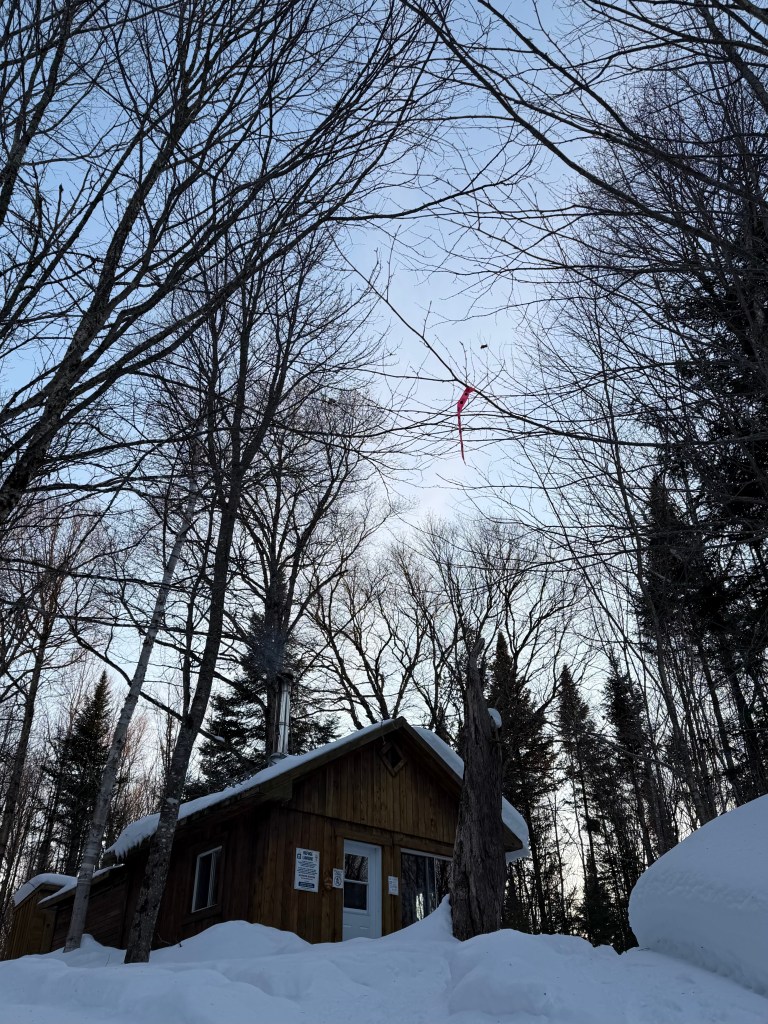
The winter can be an intimidating time to plan a backcountry adventure, but there is something so beautiful about waking up in a wooden cabin with windows overlooking a snowy forest. The snow makes the forest so serene and there is an unmatched peace to staying in a park during a quieter season.
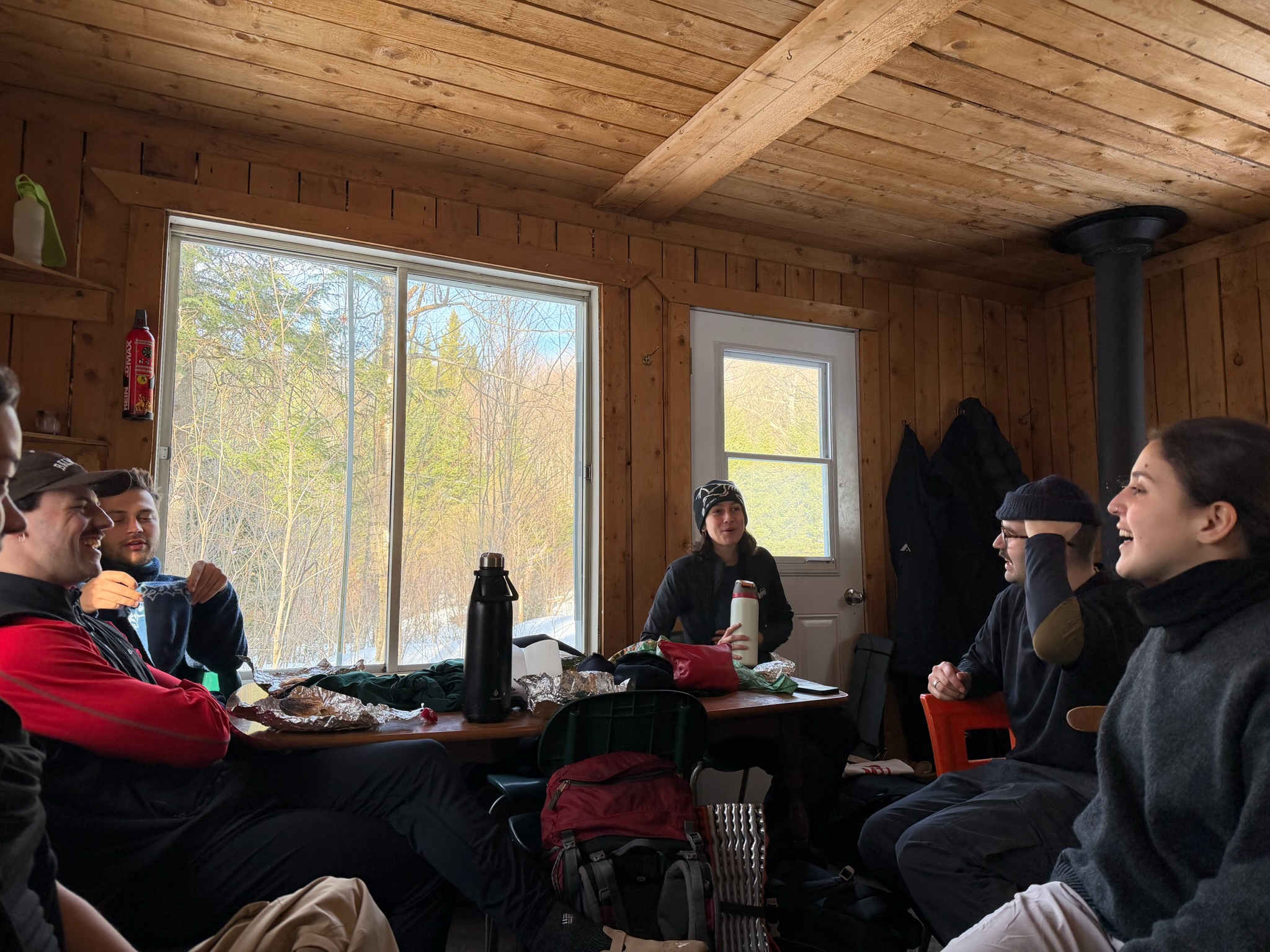
In late February, I organized a group overnight backpacking trip to a remote refuge (hut) with some of my closest friends. For many of my friends, it was their first time backpacking. None of them had backpacked in the winter before. It took a lot of preparation and gear borrowing to be ready for such a cold adventure, but it ended up being the highlight of my winter. It was so fun to all work together to get to our refuge safely and reward ourselves with a big snowball fight and a family style pasta dinner.
Being the only one who had done winter backpacking, it was intimidating to plan the whole trip and create our packing and meal plan. There are so many factors to consider when planning such a cold overnight trip with a large group, but with a few weeks of preparation, all went smoothly.
Also read: Winter backpacking packing list
Planning your trip
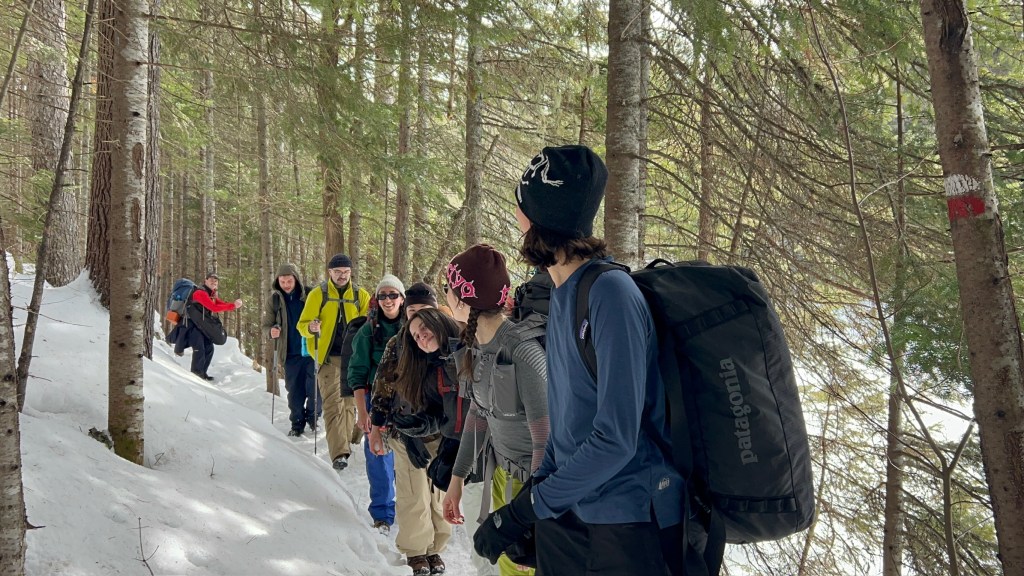
Backpacking in a group means you will need to find a middle ground for the pace and distance of your trek collectively. You should not be too ambitious with your first winter backpacking trip. While it is always fun to challenge yourself, it can be dangerous to hike in remote locations in extremely cold weather if you are not well prepared physically. Before winter backpacking, try out a hike with the group you hope to go with so you can understand each other’s pace and ability, as well as what distance is realistic. Consider that your backpacking backpack will likely be 20-30lbs, which is much heavier than your day pack. When booking a refuge, you can always book a refuge with a shorter distance than you think your group is capable of. That way, you can drop your supplies and do an additional hike with your daypack or just go play in the snow.
One of the first factors I consider when booking a winter refuge is the amount of time I need to drive the trail head and safely hike to the refuge in a day. Before even getting to your trail, it is important to consider road conditions like slowdowns and accidents from ice or snow. I always plan to leave cautiously early so that when we arrive, we have time to assess the trail conditions and safely hike to our refuge. Winter backpacking will also take much longer than your standard hike because of the trail conditions, weather, and weight of your bag. As a good rule of thumb, I allow myself double the amount of time I would generally expect to hike a distance, especially for the first day of backpacking. Days are short in the winter, so I keep my headlamp nearby just in case the sun goes down before we make it to our refuge. For multiday treks, I tend to plan my shortest distance of hiking for my first day. You can easily adjust the time you start your hike in the morning once you have made it to your first refuge, but your trip can start on a sour note if you are stressed and rushed right as you arrive at the trail.
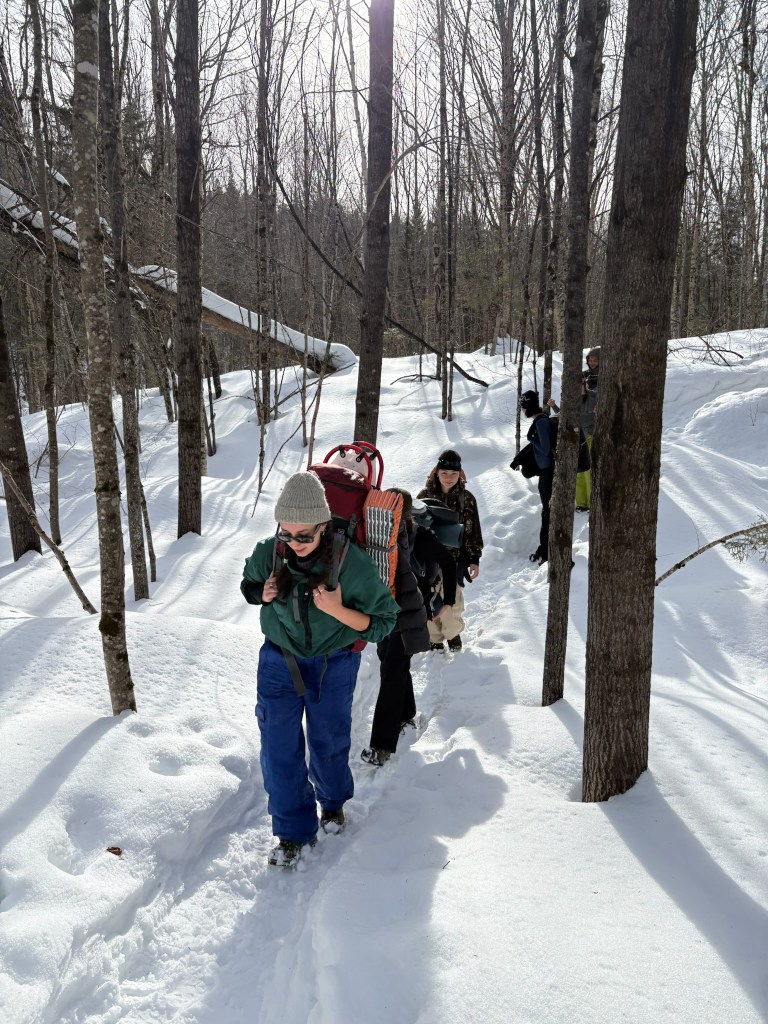
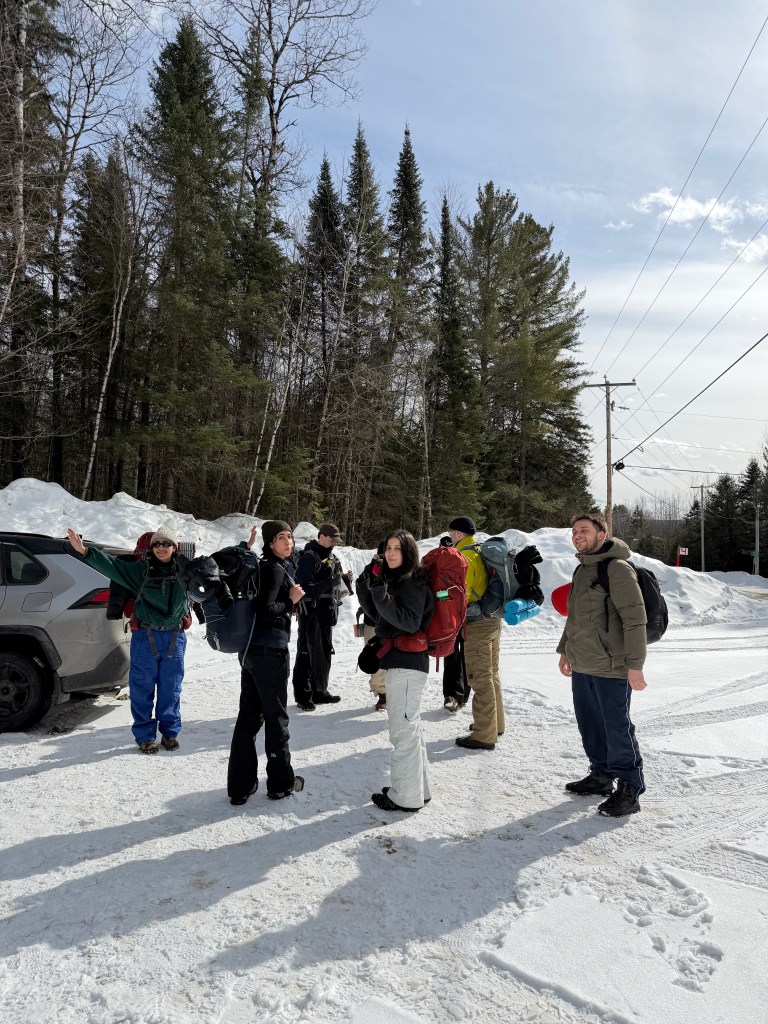
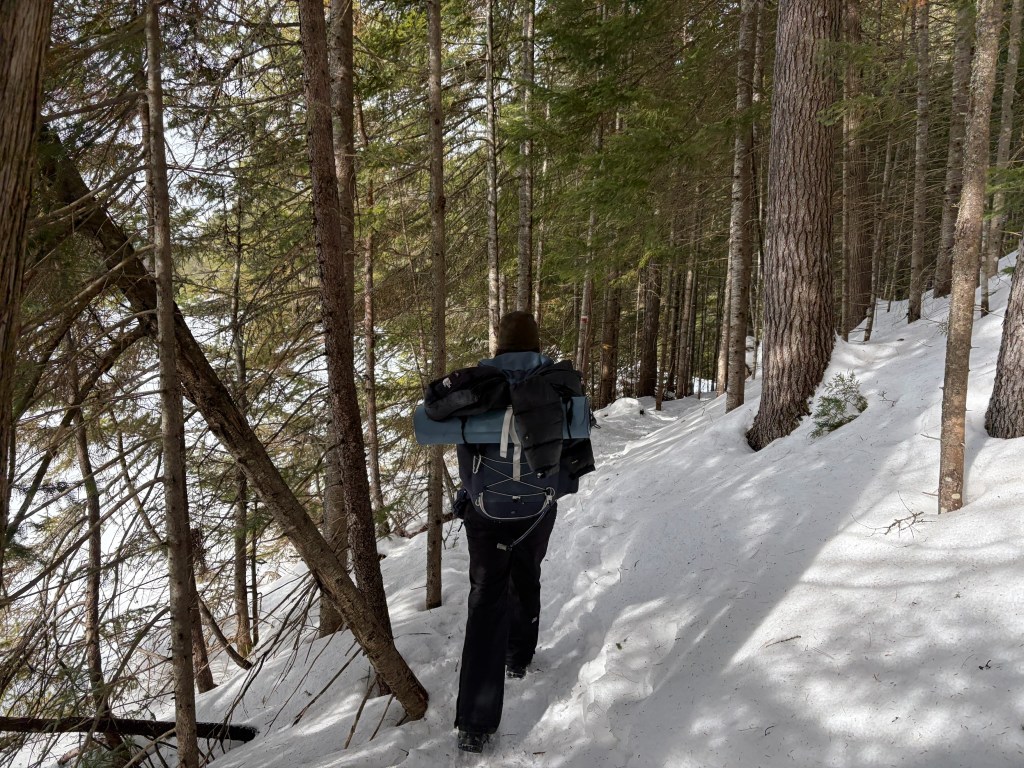
For our trip, we left Montreal around 10am and arrived at our trail around 12:30pm. We took a bit of time to have a snack, prepare our gear, and check the trail conditions before starting our hike at 1pm. While our hike was only 3km, much of the trail was uphill and there were a few technical areas (ice climbs, etc). We took breaks to take in the view, check in, fuel up, and have mini snowball fights, making our hike just under 2 hours. Our first day of hiking was around 0ºC, so we could safely take more breaks. On colder days, it is important to stay moving and never stop for too long to make sure no one gets too cold. Everyone will need to adjust their pace a bit so the group can sustainably stay in motion.
Finding your refuge
To find a refuge, I generally look at SEPAQ and regional parks. SEPAQ tends to book up much further in advance for weekend trips, so you may have better luck with regional parks. For our trip, I booked about 3 months in advance because we were a bigger group so our refuge options were more limited. If you are a group of 4-6, you will be able to book a bit closer to your travel date. You can also plan a more last-minute adventure by checking bookings regularly for cancellations. For our group, we knew we needed to borrow quite a bit of gear from friends, so it was nice to have a date reserved far in advance.
Each site should give you a full list of what supplies will be at your refuge, as well as the distance from the closest parking lot and trail difficulty. Generally, refuges in Quebec have a wood stove, an outhouse, wooden bed platforms, and a table and chairs. In the winter, they often provide firewood and a large stock pot for melting snow for drinking water.
Depending on the park, a refuge may also act as a halte-chaleur (day stop) for day hikers, so you may need to share your space if you arrive in the afternoon or leave late in the morning. Additionally, some refuges are booked by the bed. This means that you can either choose to book the whole refuge with your group, or share it with other hikers. Sharing your refuge can be a fun way to meet people with similar hobbies and interests to you.
SÉPAQ parks that offer refuge include Fjord-du-Saguenay, Gaspésie, Grands-Jardins, Hautes-Gorges-de-la-Rivière-Malbaie, Lac-Témiscouata, Mont-Mégantic, Mont-Orford, Mont-Tremblant and Monts-Valin national parks. I have been very interested in Mont-Mégantic for a winter backpacking trip but have not been able to reserve far enough in advance. This is a dark-sky reserve so it has low levels of light pollution and you can see the stars very clearly. The night sky is absolutely beautiful in the park. Many of the refuges are located on the Traversée trail, so rather than hiking out and back, you can hike across the whole park from one visitors centre to the other.
To book a SEPAQ refuge, you need to call to reserve at 1‑800‑665‑6527. If they do not have any space at the refuge you hope to book, you can also ask what their cancellation policy is and call closer to the final date that someone would need to cancel. Don’t be afraid to call regularly leading up to your ideal trip time, but you may need to have flexible hiking dates, parks, and refuges.
Outside of SEPAQ, I check refuge availability at Matawinie Regional Parks. This is a centralized booking system for the National Trail, Chute-à-Bull Regional Park, Sept Chutes Regional Park, Lac Taureau Regional Park, and Foret Ouareau Regional Park. Because the booking system is centralized, you can quickly check many refuges’ availability, which is much less time consuming than checking park by park. There are more rustic, older refuges on the National Trail whereas parks like Sept Chutes tend to have more modern refuges. My friends and I booked the Refuge Lavigne on the National Trail and found it was quite well insulated and well equipped.
For multiday treks, check the Sentier des Caps de Charlevoix. My first winter backpacking trip was along the Sentier des Caps a few years ago and it holds such a fond place in my heart. The trail leads you up and down beautiful mountains along the Saint Laurence River, so the trail is quite challenging but you are rewarded with beautiful views. They even have proposed itineraries for 2 day trips, 3-5 day trips, and to do the full traversée. While I have not gone yet, I have also heard great things about the Traversee de Charlevoix, another nearby multiday backpacking trail.
Let me know if you have any favorite parks or refuge for winter backpacking that I did not mention or if you have any questions about how I planned my trip. You can reach me by DM or email, or leave a comment on this post!
 Liz Outside
Leave a comment