
Now that it is getting warmer outside, many people are getting back to training outside or looking to start running. I am a firm believer that the only thing I really need to run is a good pair of shoes. While technical gear and running specific clothes can be helpful depending on my training goals and weather conditions, what I put the most thought into is my shoes.
I started running about 14 years ago so my training, goals, and environment have changed quite a bit over time. I started running as a teenager when I joined my school’s Track and Field team and Cross Country team. I put almost no thought into the shoes I got. The only considerations were which ones my mom would let me get and which color I liked best. After a few injuries, I learned a lot more about my running gait and how my foot lands, which helped me learn more about what shoes were right for me.
Each running shoe brand fits a bit differently, so it is a great idea to get your feet and running style analyzed at a running store that specializes in fittings. They can help you find the best brand and shoe for you. It’s more complicated than just picking up a pair of shoes, but it is worth it in terms of long term comfort. I also suggest that you always try on shoes before you buy them, even if they are from a brand you regularly buy. I avoid ordering shoes online unless I have already tried them on in a store or have the same style already and am just replacing them. I tried a few brands of running shoes when I started running and found overtime that Saucony felt the best for me. When buying new shoes, I always check out their selection first.
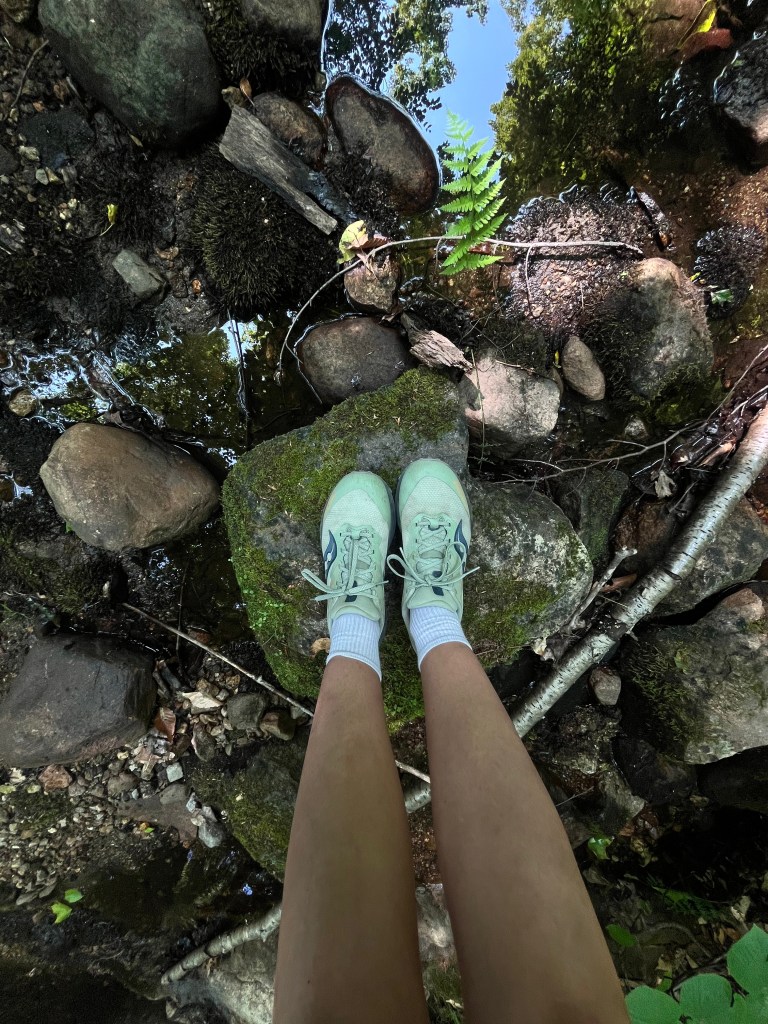
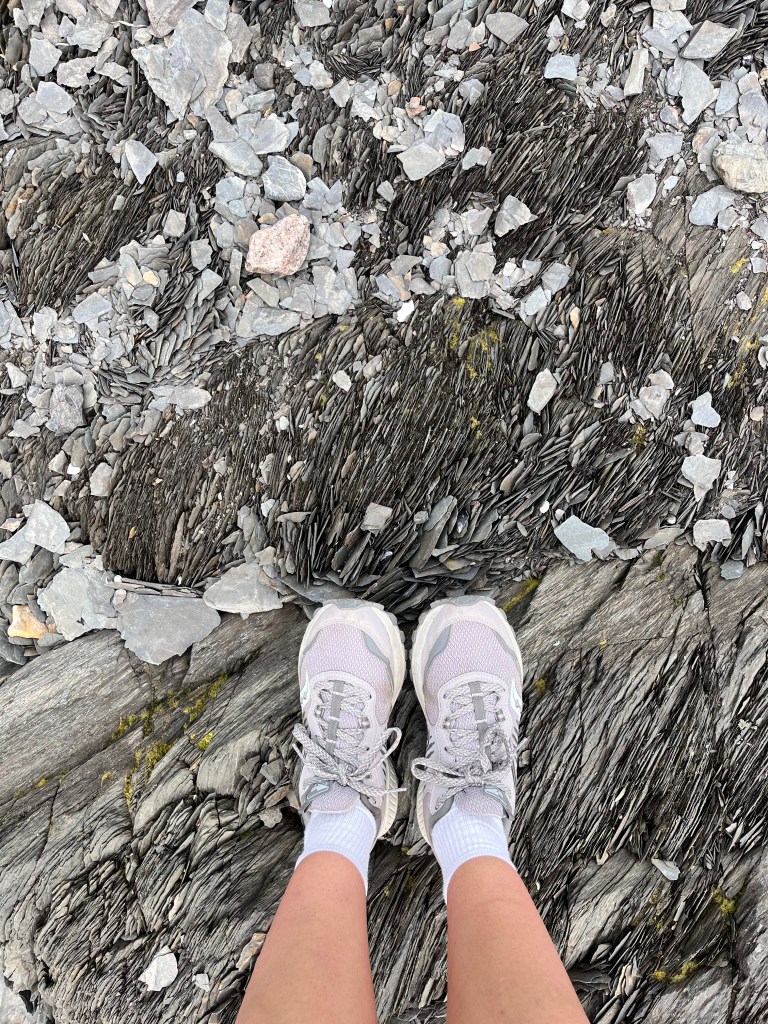
Currently I am running in the Peregrine 14 GTX and the Excursion tr15 by Saucony. I alternate between the two depending on the weather, terrain, and type of run. While it is not necessary to have two pairs of running shoes at once, I like having two so that I don’t wear down any one pair too quickly. That way, I can reserve my Gore-Tex shoes for only situations where I really need them. Gore-Tex shoes are more expensive than a standard running shoe, so I try to save them only for winter running, muddy trails, or running in the rain.
Questions I considered while choosing my shoes:
Do I need new shoes?
There are a few ways to assess the running shoes I already have. When I am deciding if I need new shoes, I consider the feel of my current shoes. Once shoes feel like they have lost their cushioning, they may need replacing. I also check the treads on the bottom of my shoes for visible wear. If the treads seem worn out, my shoes should be replaced. Also, if I have been running in a pair of shoes for a while and begin having new aches and pains, I will consider changing my shoes.
While there are different metrics of how many kilometers you can run in a shoe before it starts wearing out, I do not often keep track of my running distance so this is not a great indicator for me. Depending on the terrain you are running on or if you use your shoes for any other sports or activities, this can be a complicated metric because different uses may wear down your shoes more quickly.
There are also times when my shoes haven’t been entirely worn out, but I could tell that the feeling that the shoe itself was not the best choice for me. When I was trying out running shoes, there were some shoes that gave me foot pain or altered how I ran in a way that was giving me joint pain. While these shoes were not worn out, I would opt to get a new pair of shoes to avoid any longer term injuries.
What is my budget?
There are so many styles and features that I can get in my running shoes, so I always consider my budget before I start shopping. A standard pair of trail or road running shoes with no special features will usually do the job! Features like weather proofing, specialized cushioning, or carbon plates may fit certain running goals but will certainly increase the price of my shoes.
Once I have tried on a model of shoe I like, I often shop around a bit for a better price. I check for older generations of the pair of shoes because these tend to have a lower base price or are on sale. While sometimes I compromise on color or aesthetic, the price is often worth it. I also check for seasonal sales from my local running stores or directly from the brand’s website. Some stores and websites have sales for new customers too.
What type of terrain am I running on?
Considering the terrain of my run is a great way to assess if it is better to get road runners or trail runners. When I am running in the gym or on the road, I choose standard road running shoes. If I am incorporating trail runs into my training, even if I am still road running or running in the gym, I will get trail shoes. These tend to have a more durable sole with more traction to withstand the uneven terrain and rocks you may encounter on a trail. They can even have more protection around high wear sites, like the toe area or outside edge of the shoe.
Right now, my training is divided evenly between running on trails and roads, but road running shoes wear down much faster when I’m running on trails so I have only trail running shoes. A few years ago, I got a pair of Saucony Kinerva shoes for half-marathon training because they were so light weight. While they were a great choice while I was training predominantly on the road and for my race, when I added regular trail runs back into my training, my shoes gave out quickly.
What is the weather like where I live?
When I started running, I was living in Virginia, where the weather is quite moderate. It does not often get snowy or icy in the winter or too rainy in the summer. I just needed standard running shoes living there.
When I moved to Montreal, I found running in more extreme weather required a bit more thought into my gear. In the winter I am navigating snow and ice and in the spring I am facing big puddles from the melting snow and frequent rainfall. When I first moved here, I would only run outside in the fall, spring, and summer. I generally stuck to running on the road during these seasons and the treadmill in the winter, so I had standard running shoes.
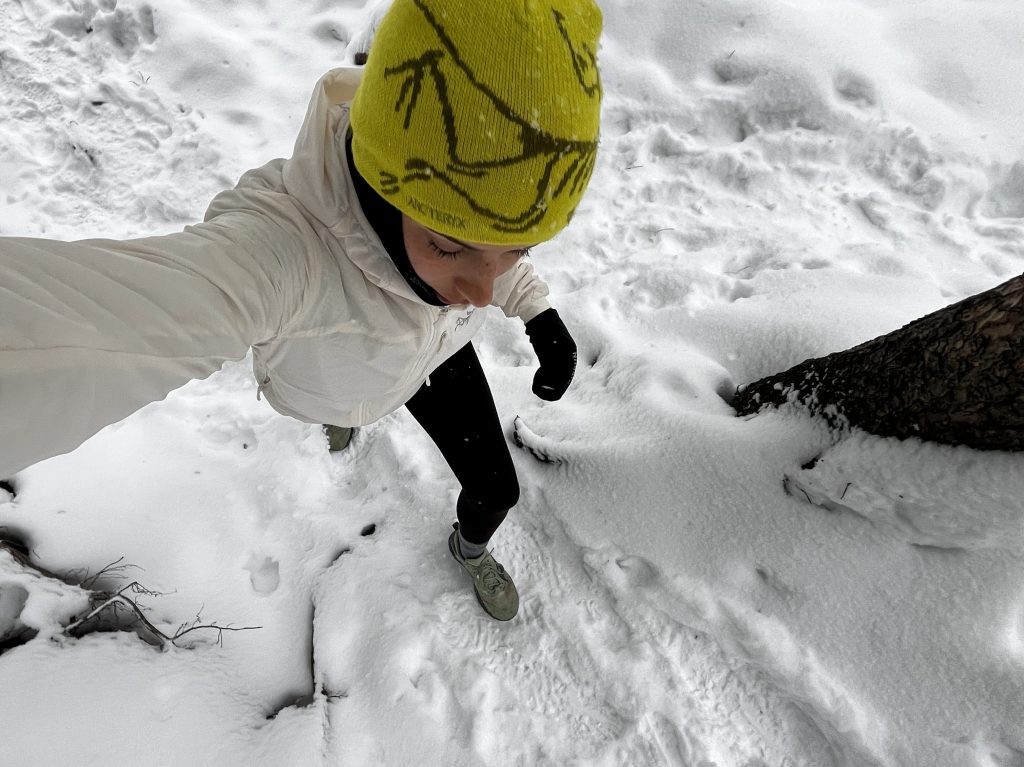
When the pandemic hit and gyms were closed, I started winter running. To get started, I used a standard pair of trail shoes. With these, I had better grip when running on ice and slush than road running shoes. They did not keep my feet dry at all, but I would leave them near my heater so they would dry overnight and be ready for my next run. While I was more prone to blisters, this did not bother me too much. While I was figuring out if I liked winter running or would realistically do it often, I didn’t get any features to my running shoes because it didn’t seem like a necessary investment.
Will I frequently run on “bad” weather days?
I will never run at the gym. I think it is from all the time I spent as a kid running on the elliptical because I was too injured to run outside with my cross country team. Now, running inside feels like a punishment. No matter the weather, I will always run outside. I particularly like running on rainy days because I put on intense music so my run becomes a dramatic, dare I say cinematic, experience.
Because I regularly run outside in less than ideal conditions (rain, snow, ice) and even seek it out, Gore-Tex shoes have been a good investment for me. It’s been great for keeping my feet drier during runs. Also since my Gore-Tex shoes don’t absorb water like my standard trail shoes, I don’t have to wait for my shoes to dry between runs. I chose the Saucony Peregrine GTX Running Shoes, which work in all seasons. To make them extra warm in the winter, I wear them with Smartwool Cold Running Socks.
What do I want to prioritize out of my shoes? Weight? Traction? Variety of use?
I alternate between prioritizing lightweight shoes or shoes with good traction depending on my training goals. When training for road races, I often opt for a more lightweight pair of shoes. I find that my trail runners can feel heavy on my feet, particularly on longer runs. In the summer when I am often camping or at cabins, I make sure I have trail running shoes that work on all types of terrain.
While many reserve their running shoes just for running, buying a different pair of shoes for each activity doesn’t fit in my budget. I generally wear my more worn out running shoes at the gym, but often wear my regular running shoes for hiking or team sports. For traveling, this also helps me pack light for trips because my trail shoes can work for regular runs and trekking.
I would love to hear what you consider before buying new shoes! Feel free to comment on this article or reach out to me directly by DM or email.
 Liz Outside
Leave a comment